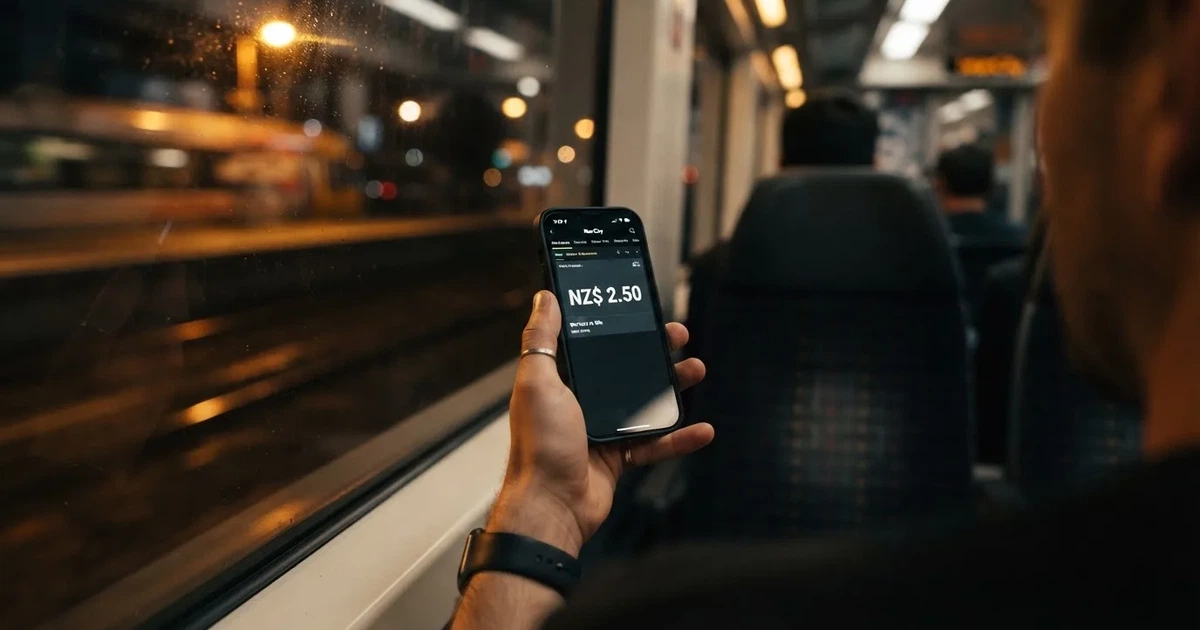
Live betting in New Zealand 2026: who may take your bet, and what an in-play slip actually pays
 Available in US
Verified against the Department of Internal Affairs register and TAB NZ’s own terms on 26 October 2026. The legal position below reflects the Racing Industry Act 2020 as amended on 28 June 2025.

Table of Contents
- Safeguards first: what the player controls in NZ
- In-play betting and cash out: how the live slip works
- The ten brands New Zealand readers actually meet
- Live betting in New Zealand: how the market actually works
- The legal frame: who may take a bet, and who may not
- Two paths, two different readers
- Frequently asked questions
Safeguards first: what the player controls in NZ
The narrower a market gets, the more important the rules around it. New Zealand’s online betting market is, by international standards, exceptionally narrow: there is one lawful provider, and the player sits inside that provider’s own safety net rather than inside a multi-operator regime. Knowing what that net actually does — and what it does not do — is the first job of anyone placing a bet here.
TAB NZ’s apps carry three of the controls a reader will hear about anywhere in the world: deposit limits, time-outs and self-exclusion. The deposit limit is set inside the account, in dollars, and the time-out is a fixed break of days or months that pauses the account without closing it. Self-exclusion is the harder stop — a minimum period set by the operator, after which the account can only be reopened through a deliberate request. TAB NZ’s exclusion applies across both of its online brands, TAB and Betcha, so closing one closes both. That cross-brand reach matters, because the same person cannot quietly reopen the other account the morning after a bad night.

What sits behind these tools is a sector-wide framework rather than a per-operator promise. TAB NZ pays a Problem Gambling Levy of 0.74% of its betting revenue — a figure in force from 1 July 2025 to 30 June 2028 — and that money funds the treatment and prevention services the helpline points to. The free Gambling Helpline is 0800 654 655, with a text line on 8006, and Safer Gambling Aotearoa provides the same kind of independent counselling underneath. Both are free, both are based in New Zealand, and both will talk to a family member who is worried about someone else’s play. Outside the operator, the Department of Internal Affairs monitors compliance and has the power to require withdrawal of unlawful offerings.
The age rule is firm: 18 for betting, set in section 89 of the Racing Industry Act 2020. A land-based casino in New Zealand runs at 20, which is a different permit and a different rule; the two are not interchangeable. A TAB NZ account requires a verified New Zealand address and identity, which is also how the operator enforces the age rule and the geographic one. There is no separate national online-betting self-exclusion register, and the register that the 2026 online casino law will require is for casino products only — not for sports or racing bets.
Two points the safety tools do not cover are worth saying out loud. The first is offshore: a self-exclusion at TAB NZ does not stop an account at an offshore brand, and the offshore brand has no obligation to honour a New Zealand exclusion. The second is recovery: the Department of Internal Affairs has warned that overseas operators may be in jurisdictions with minimal consumer safeguards, may not return unspent credits and may not pay out large wins. None of this is a marketing line; it is what the regulator publishes for New Zealand players who are considering opening an offshore account.
In-play betting and cash out: how the live slip works
A live bet, in-play bet or in-running bet is the same thing under a different name: a bet placed after an event has started, at a price the operator is setting in real time. The pre-match bet, by contrast, is locked in at the price displayed before kick-off, first serve or the off. The two diverge in three places that matter — the price moves, the market list shifts, and the bettor’s window to act shrinks.

The price changes because the model is still pricing. A favourite goes a goal in early second half and the price on them shortens sharply, sometimes within seconds, while the underdog drifts. A pre-match bettor does not see this; the in-play bettor does, and is making a decision against a moving number. The market list shifts for the same reason — a 1X2 market in football may stay open for the duration of the match, but smaller markets such as the next goalscorer or the method of the next goal can be suspended mid-event while the operator reprices. Multi-leg bets are more sensitive: a leg that has not been decided can be suspended while the others remain live, and a Same Game Multi (SGM) is built from markets on a single event so its legs can interact in ways a pre-match multi does not.
Cash out is the second tool, and it is worth understanding on its own terms. Cash out lets a bettor settle a bet before the event is over, at a price the operator offers at that moment. On a winning position, cash out takes a profit smaller than the full payout is; on a losing position, it returns part of the stake rather than zero. The catch is what a sportsbook’s own terms call out: cash out is generally unavailable while a market is suspended, and the cash-out button can fail if the price changes or the market is suspended in the delay between the tap and the confirmation. That delay is short but real, and on a fast market it is the gap that turns a green button into a rejected request. Cash out is offered on singles and on multiples at most books; whether a specific multi is cash-outable depends on the operator and on the markets inside it.
The third difference is tempo. A pre-match bet can be placed, forgotten and checked at full-time; a live bet is a running decision that the bettor is making against the operator, who is repricing against the same data. A reader who has only bet pre-match will find the first in-play session oddly fast — markets appear and disappear, prices flicker, and the slip does not always confirm on the first try. That is the medium, not a fault in the app.
How a live bet pays back uses the same arithmetic as a pre-match bet, since the formula is constant. Stake multiplied by the decimal odds gives the total return; the net profit is the return minus the stake. A $10 stake at decimal odds of 3.50 returns $35 in total and $25 as profit. The odds the bettor saw and tapped govern the payout — even if the price moved since. A combination bet, sometimes called a multi, multiplies the prices of its legs into one number: a two-leg multi at 2.00 and 3.50 has combined odds of 7.00, and a $10 stake at those combined odds returns $70 in total. The cash-out figure the operator offers derives from these prices, the current state of the legs and the operator’s own margin; it is not a free gift and is rarely as generous as the screen suggests. The point of the formula is that the same numbers describe what a winning bet returns — never how likely the bet is to win, and never whether the bettor was advised to place it.
The ten brands New Zealand readers actually meet
The set below is ordered for clarity, not for ranking: TAB and Betcha first, because they are the only operators lawfully able to take online bets from people in New Zealand; then nine brands that New Zealand players encounter in ads, in affiliate marketing and in search results, none of which is licensed to take bets from people in New Zealand. The nine are not alternatives to the two — they sit outside New Zealand law. Each is described on its own terms, and the verdict at the end of each entry is the page’s own.
TAB
TAB is one of the two online brands of TAB New Zealand, the body established by the Racing Industry Act 2020 and the only provider lawfully able to offer racing and sports betting to people in New Zealand since 28 June 2025. The TAB app covers horse and harness racing, rugby union, rugby league and other sports, with pre-match and in-play markets listed across them; the app carries a 17+ App Store age rating and a stated 18+ betting rule. Live racing is streamed in the app under the Trackside banner, with racing form, Blackbook and Jockey Challenge tools built around the stream, and the wallet is a single, simplified deposit and withdrawal screen.
The partnership with Entain — signed in 2023 and running for 25 years — sets out a 50/50 share of gross profits between TAB NZ and Entain, with at least NZ$150m a year going to TAB NZ for the first five years; Entain also pledged a one-off NZ$100m payment to the racing sector at signing. The numbers are large because the business is, by New Zealand, of several billion dollars a year and because the racing codes are funded from its returns.
The TAB NZ app is where a New Zealand resident who wants to bet on a Saturday football match or a Melbourne Cup field actually does it, in law. There is no alternative inside New Zealand.
Betcha
Betcha is the second online brand of TAB NZ and operates under the same statutory basis as TAB. It carries the same racing and sports product and the same harm-minimisation tools, and a self-exclusion on one brand is an exclusion on both. Its distinguishing feature is the Multi Builder: a tool that lets a punter build multi bets from scratch, copy trending multis from other Betcha users and track each live leg of an open multi in one view; a separate multi-grid builds Same Game Multis from markets inside a single event. The interface leans younger than TAB’s, and the social features are the main reason a reader who already bets with TAB might open a Betcha account for a multi-heavy session.
The legal position is identical to TAB’s. Both are TAB NZ; both are inside the monopoly; both are subject to the same Department of monitoring and the same advertising code.
Winz.io
Winz.io names Anjouan and Tobique licensing in its footer. Neither is a New Zealand licence, and neither confers authority to accept bets from New Zealand residents under section 74AAA of the Racing Industry Act 2020. No New Zealand complaints route or harm-minimisation framework reaches the brand. Winz.io is, on the page’s own reading, an unlawful option for a New Zealand resident.
RTbet
RTbet’s sportsbook covers football, tennis, table tennis, basketball, ice hockey, American football and baseball, with live betting and virtual sports alongside the pre-match offering. The brand names a Curaçao licence, which affords no authority to serve New Zealand. A reader who likes the look of RTbet’s menu needs to know that opening an account from a New Zealand address puts the brand in breach of New Zealand law and leaves the reader outside any New Zealand consumer protection.
Thunderpick
Thunderpick is owned and operated by Paloma Media B.V., a Curaçao-registered company (number 146988) and licensed by the Curaçao Gaming Authority under licence OGL/2024/677/0722. The licence is real; it is simply not a New Zealand licence and does not extend to taking bets from people in New Zealand. There is no New Zealand complaints route for a Thunderpick dispute, making the operator a risky choice.
Roobet
Roobet operates under Raw Entertainment B.V. (registration 157205, Korporaalweg 10, Curaçao) with Curaçao licence OGL/2024/687/0427. The product set is casino-led, with a sportsbook layered on top; the Curaçao licence confers no authority to accept bets from New Zealand residents. A New Zealand player who opens a Roobet account sits outside the New Zealand consumer protection framework, a risk the Department of Internal Affairs has highlighted.
FunBet
FunBet’s sportsbook covers football, ice hockey, American football, basketball, volleyball, tennis, rugby and baseball, with live betting and a 24/7 framing on the brand’s own terms. The brand names no licence that applies in New Zealand; it offers no New Zealand complaints route and no harm-minimisation framework whatsoever.
RoyalistPlay
RoyalistPlay’s sportsbook offers live betting, sports promotions, results and a schedule across football, basketball, tennis, handball, ice hockey, volleyball and table tennis, with a separate e-sports and Predictions section. The brand names a Tobique Gaming Commission e-gaming licence (number 0000002), held by Novatrix SRL — a licence that the New Zealand regulator does not recognise and that confers no authority to accept New Zealand bets.
Glorion
Glorion’s sportsbook covers pre-match and live betting, virtual sports, horse racing and esports, with markets grouped into popular, niche, indoor and outdoor sports plus entertainment events such as award shows and elections. Support runs through Live Chat and email, and the site states it accepts only customers over 18. None of that changes the licence picture: the brand names no licence applicable in New Zealand, and a New Zealand bettor using Glorion operates outside the local framework.
BillyBets
BillyBets runs a casino and a sportsbook under one account. The sportsbook covers football, tennis, table tennis, basketball, ice hockey, American football, baseball, combat sports, esports, virtual sports and live betting. Support is 24/7 via live chat and a Help Centre, and the platform runs on both Android and iOS through the mobile site. The licence position mirrors the others: no New Zealand licence, no local complaints route, and the brand is not a lawful option for anyone in New Zealand.
A short comparison of the ten brands
The table below compares the ten brands on the same three matters: what their New Zealand status is, what their own terms say about the in-play product, and which safety tools they publish to a reader who lands on the homepage.
| Brand | New Zealand status | In-play product per the brand’s own terms | Safety tools on the homepage |
|---|---|---|---|
| TAB | TAB NZ brand — the only lawful option | Live racing streamed under Trackside; in-play sports markets in the app | Deposit limits, time-outs, self-exclusion across TAB and Betcha |
| Betcha | TAB NZ brand — the only lawful option | Multi Builder with trending multis and live leg tracking; SGM grid | Same TAB NZ framework; cross-brand exclusion |
| Winz.io | Not licensed in New Zealand | Live betting present in the sportsbook | Named Anjouan and Tobique licences only |
| RTbet | Not licensed in New Zealand | Live betting and virtual sports in the sportsbook | Curaçao licence; no NZ framework |
| Thunderpick | Not licensed in New Zealand | In-play and esports markets | Curaçao licence OGL/2024/677/0722; no NZ framework |
| Roobet | Not licensed in New Zealand | In-play markets layered on a casino-led product | Curaçao licence OGL/2024/687/0427; no NZ framework |
| FunBet | Not licensed in New Zealand | Live betting, 24/7 framing | No NZ-applicable licence named |
| RoyalistPlay | Not licensed in New Zealand | Live betting, results and schedule | Tobique e-gaming licence (Novatrix SRL); no NZ framework |
| Glorion | Not licensed in New Zealand | Live betting, virtual sports, horse racing, esports | 18+ statement, Live Chat and email support |
| BillyBets | Not licensed in New Zealand | Live betting alongside the casino account | 24/7 live chat and Help Centre |
What the table does not show is the gap the regulator cares about most. Only the first two rows sit inside the New Zealand framework; the other eight are accessible to a New Zealand player but operate outside the country’s consumer protection, advertising oversight and harm-minimisation regime. A reader choosing between them is choosing between an in-country operator and an offshore one — not between two equally lawful options.
Live betting in New Zealand: how the market actually works
Live betting in New Zealand is, on the betting side, simpler than almost any other market a reader can compare it to. There is one lawful provider — TAB New Zealand — and two online brands through which a New Zealand resident can place a bet: TAB and Betcha. Both are run by TAB NZ and operated under a long-term partnership with Entain. The offshore market that a New Zealand reader sees in ads is not licensed to serve New Zealand; the Department of Internal Affairs told those providers to withdraw with immediate effect when the new section 74AAA took effect on 28 June 2025.
The mechanics inside the two brands are familiar to anyone who has used a major online sportsbook: fixed-odds betting, tote or pool betting on racing, multi bets, Same Game Multis, boosted prices, and a live product that updates while an event is in progress. TAB NZ’s published betting rules define a long list of bet types — Win, Place, Each Way, Quinella, Exacta, Trifecta, First Four, Double, Treble, Daily Double, Running Double, Quaddie, Big6, and the multis. The in-play product sits inside that frame, with cash out on singles and multiples and live streaming for racing through the Trackside feed. The actual list of in-play events depends on the day’s programme; the structure that supports them does not.
What the structure does not include is also worth saying. There is no New Zealand-licensed betting exchange, and the Racing Industry Act does not treat spread betting as sports betting under TAB NZ’s definition. Bets on politics and on novelty events are not established as part of TAB NZ’s published offering. The greyhound racing code is closing in stages from 1 August 2026, and from that date no operator — TAB NZ or offshore — may take bets on greyhound races. The reason a New Zealand reader cannot bet on an election result through TAB NZ is not a quirk of the platform; it is the shape of the law that established the monopoly.
The Entain partnership is worth a paragraph on its own, because it determines what TAB NZ looks like as a product. Under the 25-year agreement signed in 2023, Entain operates the TAB business and shares gross profits 50/50 with TAB NZ, with at least NZ$150m a year flowing to TAB NZ for the first five years; Entain also committed a one-off NZ$100m payment to the racing sector at signing. The product roadmap — Betcha’s Multi Builder, the in-app live experience, the streaming integration — sits inside that partnership. From the punter’s seat the partnership is invisible; from the regulatory seat it is the reason the product has moved forward at the pace it has.
The legal frame: who may take a bet, and who may not
The Racing Industry Act 2020 establishes TAB NZ as the sole provider for racing and sports betting in New Zealand. The Racing Industry Amendment Act 2025 inserted section 74AAA, which took effect on 28 June 2025 and which states that no person other than TAB NZ may offer racing betting, sports betting or other racing or sports betting to a person in New Zealand, regardless of where that person is resident or incorporated. The Department of Internal Affairs monitors compliance with the betting prohibition under section 92A of the same Act and told unlicensed providers to withdraw with immediate effect when the amendment came into force. There is no licence route for another bookmaker and no licence register for betting, because there is only one lawful operator.
Three things follow from that, and a reader needs to know all three.
The first is that the prohibition targets the operator, not the player. Section 19(4) of the Gambling Act 2003 (inserted in 2025) says an individual may not be convicted for placing a bet with an offshore betting operator in breach of section 74AAA. The Department has not published a penalty for a player. What the Department has published is a warning: overseas operators may be in jurisdictions with minimal consumer safeguards, may not return unspent credits and may not pay out large wins. Honest framing is that the law targets the operator; the player is warned, not prosecuted.
The second is that the prohibition covers any operator serving a person in New Zealand, regardless of where the operator is based. A Curaçao-licensed brand, an Anjouan-licensed brand, a Tobique-licensed brand and a brand with no licence at all share the same legal standing: they are not permitted to accept these bets. The licence they hold confers no right to accept New Zealand bets, and holding one does not make the offer lawful.
The third is that the prohibition does not, on its own, geo-block offshore websites. A New Zealand reader can still reach an offshore brand from a New Zealand internet connection. What it does is put the legal liability on the operator. The reader who arrives at an offshore site through a search engine or an affiliate link is not breaking the law by being there, but is also not inside any New Zealand framework that will help them if the operator fails to pay, refuses to close an account or applies a bonus term in a way that loses them money.
The Online Casino Gambling Act 2026 licenses online casino gambling only; it does not license sports betting. TAB NZ winning the right to apply for a casino licence does not extend the betting monopoly, and a casino licence held by any other operator does not give that operator any right to take sports bets. The two products are separate permits with separate rules. An online casino is 18+ in the same way a TAB NZ account is, but the harm-minimisation regime, the advertising rules and the operator’s obligations are different.
The advertising rules sit in the Advertising Standards Authority’s Gambling Advertising Code, which applies to all betting advertisements regardless of operator. Ads must not target children (under 14) or young people (14 to under 18), judged by context, appeal and expected audience (25% or more of the audience counts as significant where accurate data exists); they must not encourage harm; and they must be truthful, with terms available. Because TAB NZ is the only lawful operator, the Department reads the prohibition as covering promotion or taking of bets for another operator in New Zealand; how the Department treats betting affiliates is not established. The page describes the monopoly and does not invite readers to sign up with an offshore brand, because describing and judging is one act and inviting is another.
On tax, the player side is straightforward. Inland Revenue’s published guidance says recreational gambling winnings are generally not taxable, and prize money from TAB horse, dog and trotting races is not taxable. A person who bets as a business is a different case, and the right answer for that person is an accountant or Inland Revenue directly. On the operator side, overseas operators supplying New Zealand residents pay online gambling duty — 12% of profits since 1 July 2024, rising to 16% from 1 January 2027 — and TAB NZ pays the Problem Gambling Levy (0.74%). Paying duty does not make an offer lawful; a duty being payable to Inland Revenue is a tax obligation, not a permission to take bets. The point-of-consumption charge on offshore racing and sports bets ceased on 30 June 2026.
Two paths, two different readers
The angle of this page is choice — not “best brand”, because the question does not have one answer under New Zealand law, but “which path fits which reader”.
The first path is the in-country one: TAB and Betcha, both TAB NZ, both lawful, both inside the New Zealand harm-minimisation framework. The reader this path suits is the one who wants a New Zealand-licensed operator, a New Zealand complaints route, deposit limits and self-exclusion that the regulator can enforce, a wallet denominated in NZ dollars with no currency-conversion step, and a product set that covers the racing codes and the major sports a New Zealand punter actually bets on. The drawback is the menu: TAB NZ’s product set is narrower than a major offshore sportsbook’s, and a reader who wants deep coverage of niche events, novelty markets, political betting or sportsbooks-driven markets such as player props across twenty leagues will not find them here.
The second path is the offshore one: any of the brands from Winz.io down to BillyBets, plus others not reviewed on this page. The reader this path fits is the one who has decided that the product set they want is not available in New Zealand and who is willing to accept the trade-offs that come with that decision. The trade-offs are not theoretical. The Department of Internal Affairs has warned about unspent credits, unpaid large wins and minimal consumer safeguards. There is no New Zealand complaints route for a dispute with an offshore operator; the dispute goes through the operator’s own terms and, where the operator’s licence requires it, the licensing authority in the licence’s jurisdiction. A self-exclusion at TAB NZ does not extend to an offshore account, and a harm-minimisation regime that does not know the player is the only framework the offshore operator sits inside. The reader who takes this path is, in plain language, opting out of the New Zealand framework; that is a real choice and a real consequence, and the page does not dress it up.
Between the two paths there is a third one the page will name but not recommend: the grey area where a New Zealand player uses a VPN or a payment method that does not declare the New Zealand address, to access an offshore brand as if from elsewhere. The law does not require a payment-blocking order, no bank obligation has been published, and the Department has not stated a position on VPN use. None of that makes the arrangement lawful for the operator; the operator remains in breach of section 74AAA if it knowingly takes the bet. A reader who travels and bets while abroad is in a different position and needs to read the operator’s terms before assuming the New Zealand rules do not apply on return.
The honest summary is that the choice for a New Zealand resident is between a narrower product inside a complete framework and a wider product inside an absent one. The page’s job is to make that visible; the reader’s job is to decide which side of it they sit on.
Frequently asked questions
How do I bet live football in New Zealand?
Open a TAB NZ account through TAB or Betcha, fund the wallet, pick a market from the live football tab, set a stake and confirm the slip. Live football markets include 1X2, next goal, total goals and Same Game Multis; odds are decimal, the slip confirms at the price tapped and the bet settles at full-time. Bets placed on TAB NZ are settled in NZ dollars and sit inside the New Zealand harm-minimisation framework. No other operator is licensed to take that bet from you in New Zealand.
Is live betting better than pre-match?
It is faster, not better. The price moves while the event is in progress, so a bettor who waits for information is acting on fresher data than a pre-match bettor; the price is also less generous than the pre-match equivalent, because the operator has narrowed its margin against the same information. Cash out is the live product’s signature feature, and it is the one most affected by suspension and delay. The honest answer is that live betting suits readers who want to react to what they are watching, and pre-match suits readers who want the price locked in before kick-off.
How is the return on a bet worked out from the stake and the odds?
Stake multiplied by decimal odds gives the total return; total return minus the stake is the net profit. A $10 stake at 3.50 returns $35 in total and $25 as profit. A multi multiplies the prices of its legs into one combined price, and the same formula applies to the combined price. The return is what a winning bet pays back; the formula does not say anything about whether the bet will win, and an average payout across many bets is the figure that describes the market’s margin, not a single bet’s outcome.
Which bookmaker may lawfully take sports and racing bets from me in New Zealand?
TAB and Betcha, both brands of TAB New Zealand, are the only operators that may lawfully take online sports and racing bets from a person in New Zealand. The position is set by section 74AAA of the Racing Industry Act 2020, in force since 28 June 2025. There is no licence route for another bookmaker and no licence register, because there is only one lawful provider. Any other brand offering to take your bet is operating outside the New Zealand framework, regardless of the licence it holds elsewhere.
Which tools for controlling play do TAB and Betcha offer, and who can be called for help?
TAB NZ’s apps carry deposit limits, time-outs and self-exclusion, with the exclusion applying across both TAB and Betcha. The free Gambling Helpline is 0800 654 655, with a text line on 8006, and Safer Gambling Aotearoa provides independent counselling. TAB NZ pays a Problem Gambling Levy of 0.74% of betting revenue that funds the treatment and prevention services behind those numbers. Help is free from both services and available to the player and to a family member worried about someone else’s play.
Prepared by the Nzinstantbanking editorial staff.