
Boxing Betting in New Zealand in 2026: Who Takes the Bets, How the Odds Are Built, and What a Wager Actually Costs
 Available in US
A boxing bet in New Zealand in 2026 is, by law, a TAB NZ bet. Since 28 June 2025, section 74AAA of the Racing Industry Act 2020 has barred anyone other than TAB NZ from offering sports or racing bets to people in New Zealand, and the two online brands that carry that monopoly are TAB and Betcha. The offshore bookmakers that an NZ punter meets through a search result or a banner ad (RTbet, BigClash, LegendPlay, Alawin, BillyBets, Spinbara, Rabona, Thunderpick) have no licence to take a bet from someone in New Zealand, which means a payout dispute, a blocked withdrawal or a stuck bonus lands outside New Zealand’s complaints system entirely. This page walks through the structure of a boxing market, the offers the monopoly operator runs, the offer arithmetic that turns marketing copy into a real cost, and the comparison set that frames a NZ bettor’s choice.
Data current as of 26 October 2026, checked against TAB NZ’s own terms and the Department of Internal Affairs’ public register guidance.
Table of Contents
- The shape of a boxing card and why the sport bends the odds
- TAB NZ and the monopoly on boxing bets in New Zealand
- Bookmakers outside New Zealand: how the page treats them
- Boxing odds: how a market is built and what the margin takes
- What kinds of boxing bet TAB NZ prices
- The “free bet” and how it actually pays
- How a boxing bet is settled and what the punter sees
- Responsible gambling in a monopoly market
- Bonuses, free bets and the cost of clearing them
- Predictions, strategy and what a boxing tip actually delivers
- The comparison set and what each operator brings to a boxing bet
- Verdict: the page’s read of the comparison
- Boxing betting markets and what each one costs
- The arithmetic of a boxing bet, step by step
- What a TAB NZ or Betcha boxing bonus looks like in numbers
- Frequently Asked Questions
The shape of a boxing card and why the sport bends the odds
Professional boxing bouts run 10 to 12 rounds, with four-round fights common for newer fighters. Each round is three minutes with a one-minute rest between rounds. That structure matters to a bettor because it defines how a fight ends: a knockout, a technical knockout (a stoppage by the referee, the doctor or the corner), a decision on the judges’ scorecards, or a disqualification for fouls. A draw is its own outcome, returned when the judges give both fighters equal scores.

Four bodies sanction world championships: the WBA, the WBC, the IBF and the WBO. A world-title fight tends to attract sharper market-making than a six-round regional card because the fighters are known and the data is dense. An undercard bout between two prospects is the kind of contest the bookmaker prices loosely, and a loose price costs both sides: the favourite’s odds shrink because the underdog is unknown, and the underdog’s odds are wide enough to lure a stake that the price never deserved.
A boxing market is also two-sided in a way most team sports are not. A football match can go to extra time, a basketball game can tie and head to overtime, a tennis match runs set by set with a third-set tie-break. A boxing bout ends when it ends. That means the menu of outcomes is short and sharp: fighter A wins, fighter B wins, or a draw. Three prices, and the bookmaker’s margin sits across all three.
TAB NZ and the monopoly on boxing bets in New Zealand
TAB NZ’s two online brands, TAB and Betcha, are the only operators allowed to take sports and racing bets from people in New Zealand, and the change took effect on 28 June 2025 when the Racing Industry Amendment Act 2025 inserted section 74AAA into the Racing Industry Act 2020. The Department of Internal Affairs told providers serving the New Zealand market to withdraw with immediate effect. There is no licence to apply for and no licence register for bookmakers, because the law names a single provider rather than admitting applicants.
TAB NZ’s betting partner Entain runs the TAB business under a 25-year agreement signed in 2023. The structure gives Entain a 50/50 share of gross profits, with at least $150m a year going to TAB NZ for the first five years, and Entain pledged a one-off $100m payment to the racing sector. For a punter this matters for two reasons: the platform itself is built on Entain’s tech stack, so the betting slip, the in-play interface and the bonus mechanics are the same product a Betcha account uses; and the price the bookmaker sets on a Joshua fight or a Parker undercard is one TAB NZ price, not two competing ones.
TAB and Betcha are one operator group, never rivals. They share the same betting product, the same pricing engine, the same safer-gambling tools and the same self-exclusion register, so an exclusion on one brand carries across to the other.
Bookmakers outside New Zealand: how the page treats them
The brands ranked below TAB NZ on this page are not lawful in New Zealand. RTbet, BigClash, LegendPlay, Alawin, BillyBets, Spinbara, Rabona and Thunderpick all sit on offshore licences (Curaçao in several cases, Anjouan Gaming Authority for one); none of these grants authorisation to accept wagers from New Zealand residents. A New Zealand-registered punter who opens an account with any of them gets no New Zealand complaints route, no harm-minimisation framework and no recourse through the Department of Internal Affairs if a payout stalls or a bonus term bites.
DIA warns that overseas operators may be in jurisdictions with minimal consumer safeguards, may not return unspent credits and may not pay out large wins. None of these outcomes is guaranteed, and an offshore brand that has paid out cleanly for years is not legally safer on that account. The point is jurisdictional: when something goes wrong, the place the player complains to is the licence that brand holds, not the regulator a New Zealand bettor might name.
The Offshore Casino Gambling Act 2026 and the Online Casino Gambling Act 2026 do not change this. They license online casino gambling only; the right TAB New Zealand won to apply for an online casino licence does not extend to sports betting, and greyhound racing is closing in stages from 1 August 2026, after which offshore operators may not take bets on greyhound races either.
Boxing odds: how a market is built and what the margin takes
A boxing market is a three-outcome market in all but the simplest main-event pricing: fighter A, fighter B, and the draw. The bookmaker’s margin is the share of every dollar staked that the bookmaker keeps on average. To see it, take the decimal odds on all three outcomes, invert each (1 ÷ odds), add the three inverses, and the result is the payout share. One minus the payout share is the margin.
On a clean two-outcome example at odds 1.90 and 1.90, the payout share is 1 ÷ (1 ÷ 1.90 + 1 ÷ 1.90) = 1 ÷ (0.5263 + 0.5263) = 1 ÷ 1.0526 = 0.9500, or 95.00% of every dollar staked. The margin is 5.00%. Move the prices to 1.85 and 1.95 and the payout share is 1 ÷ (0.5405 + 0.5128) = 1 ÷ 1.0533 = 0.9494, or 94.94%; the margin widens slightly to 5.06%. A heavy favourite priced at 1.20 against an outsider at 6.50 gives a payout share of 1 ÷ (0.8333 + 0.1538) = 1 ÷ 0.9872 = 1.0130, or 101.30%, which is impossible, so the published prices must include the draw or carry a wider margin on the two-outcome version. This is the work the bookmaker’s margin does invisibly: the payout share on a boxing market almost never reaches 100%, and it usually sits somewhere in the 92% to 96% band depending on the card.
The practical lesson: a bet on the favourite pays less than a win is worth, and a bet on the outsider pays a price the bookmaker has already discounted. The difference between the two is the margin, which the punter pays whether the favourite wins or loses.
What kinds of boxing bet TAB NZ prices
A TAB NZ boxing card carries the basic three-outcome market and a layer of method and round markets underneath. The main-event menu looks like this in practice:
- Winner (head-to-head). Fighter A or fighter B, with the draw priced separately when the bookmaker offers it.
- Method of victory. Decision, knockout, technical knockout, or disqualification, applied to either fighter. A “win by KO/TKO” market is more permissive than a “win inside the distance” market and the odds differ accordingly.
- Round grouping. The fight ends in rounds 1 to 3, 4 to 6, 7 to 9, or goes the distance. A heavy favourite often has short round-grouping odds because the priced expectation is an early finish.
- Total rounds. Over or under a published round count, with the count set so each side carries comparable odds.
- Same-game multi (SGM). A multi whose legs come from one event: method plus round plus winner, or winner plus total rounds, priced as one combined bet.
- Live betting. TAB NZ’s apps carry live markets; pricing shifts with the action in the ring, and a live bet placed after a strong opening round from the favourite carries a tighter margin than a pre-match bet placed under the same expectation.
TAB NZ also publishes the racing-side bet types (Win, Place, Each Way, Quinella, Exacta, Trifecta, First Four, Quaddie, Big6), which a boxing-only punter will not meet. The boxing menu is short, which is its own kind of edge: a punter can learn every market on the card rather than chasing exotic lines the house prices loosely.
The “free bet” and how it actually pays
TAB NZ and Betcha run “bonus bets” promotions, and the marketing calls them free. The mechanism is standard for the industry and worth naming clearly because the name misleads: a bonus bet pays the profit on a winning selection, not the stake. A $10 bonus bet at odds of 3.00 pays $20 of profit, not $30, because the $10 stake is the bonus, not a real stake the bookmaker returns on top.
The free-bet value formula states what the offer is worth on average. For a bonus bet whose stake is not paid back, value = free-bet amount × (odds − 1) ÷ odds × payout share of that market. A $10 bonus bet at odds of 3.00 on a market with a 95% payout share gives 10 × (3.00 − 1) ÷ 3.00 × 0.95 = 10 × 0.6667 × 0.95 = $6.33 of expected value. A $10 bonus bet at odds of 5.00 on the same market gives 10 × (5.00 − 1) ÷ 5.00 × 0.95 = 10 × 0.8000 × 0.95 = $7.60. The higher the odds, the closer the bonus bet’s expected value approaches the bonus amount, because a longer price carries more profit per dollar of stake. A short-priced bonus bet at odds of 1.50 gives 10 × 0.50 ÷ 1.50 × 0.95 = $3.17 of expected value, well under half the bonus amount.
The headline number ($10) is the bonus amount. The number the punter needs to care about ($3.17 to $7.60 on a $10 bonus bet depending on the price) is the expected value, and that is what the bonus is “worth” in expectation across many uses of the offer.
How a boxing bet is settled and what the punter sees
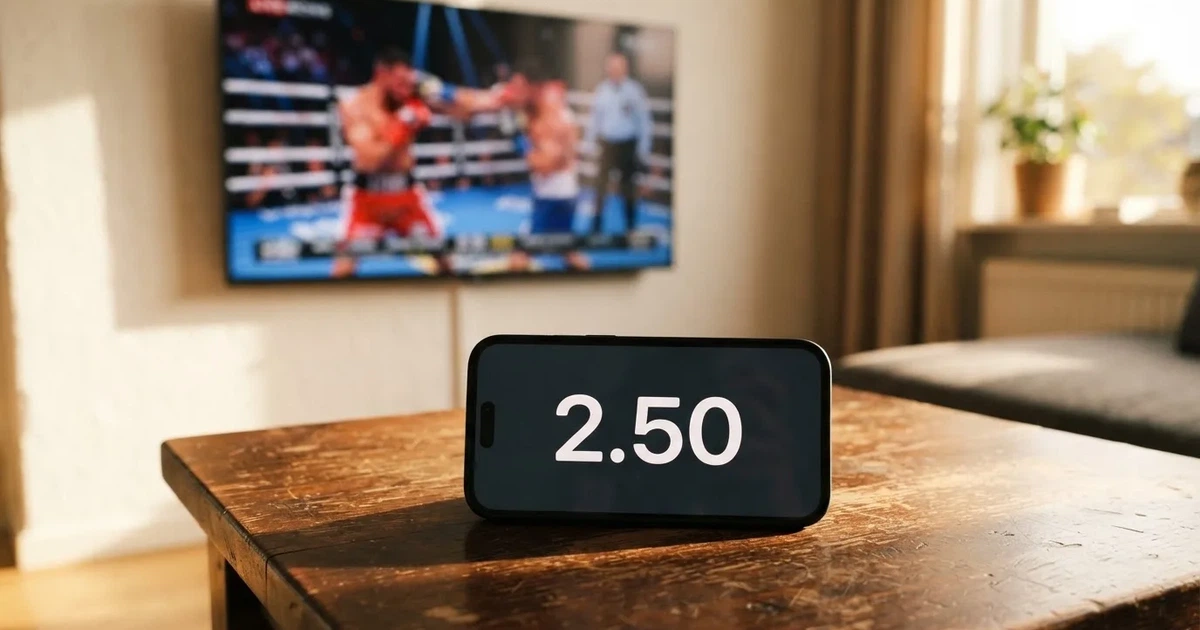
A winning bet pays the stake multiplied by the decimal odds. A $50 bet at odds of 2.50 returns $125 (the $50 stake plus $75 of profit). The same bet at odds of 1.50 returns $75 ($50 stake plus $25 of profit). The bet slip on a TAB NZ or Betcha account shows the odds, the stake, the potential return and the potential profit before the bet is placed.
A losing bet pays nothing. A push (a selection declared void) returns the stake. A multi loses if any leg loses. A same-game multi loses if any leg loses; the legs do not save each other.
A draw on a head-to-head market depends on the bookmaker’s rule. Most boxing books price the draw as a third outcome, and a draw returns the stake on fighter A and fighter B bets. Some books void the head-to-head market on a draw; the punter must read the rule before staking.
Responsible gambling in a monopoly market
TAB NZ provides safer-gambling tools in its app: deposit limits, time-outs and self-exclusion. The exclusion applies across TAB and Betcha because they share one operator. The app lists the free New Zealand Gambling Helpline (0800 654 655) and the text line (8006), both run by Safer Gambling Aotearoa.
The age for TAB NZ betting is 18. Betting under 18 is an offence under section 89 of the Racing Industry Act 2020. The TAB NZ app carries a 17+ age rating on the New Zealand App Store while making clear that customers must be 18 or over to bet; the difference is the store’s age gate, not the legal age. Land-based casinos in New Zealand set their own age at 20; the betting age is the lower one, and the two must never be merged.
TAB NZ accounts need a verified New Zealand address and ID. Offshore operators cannot offer the same harm-minimisation framework because the law does not reach them, and the offshore advantage of “no ID, no verification” is the offshore disadvantage when something goes wrong: the punter has no name on the account the regulator can see, no deposit limit the regulator enforces, and no complaints line the regulator answers.
Bonuses, free bets and the cost of clearing them
A boxing bonus is a marketing promise and a turnover obligation. The marketing promise is the headline: 100% up to a stated amount, a boosted-odds token, a refund-as-bonus-bet if the first bet loses. The turnover obligation is the wagering factor the bonus carries: how many times the bonus, or the bonus plus deposit, must be turned over before the bonus balance and the winnings attached to it can be withdrawn.
A bonus with a 5x wagering factor on the bonus amount and a $50 bonus means $250 of qualifying turnover. At an average stake of $25, that is 10 bets. At a minimum price of 1.50 per qualifying bet, the punter needs to place bets priced at 1.50 or higher, and the bookmaker’s margin (5% on most boxing markets) means the expected cost of the turnover is $250 × 0.05 = $12.50 of expected cost. The bonus pays $50 of headline value but costs $12.50 to clear on average, for a net expected value of $37.50 before considering the time, the chance of a hot streak that accelerates the clear, or the chance of a cold streak that depletes the balance before the turnover is met.
A bonus with a 10x wagering factor on the bonus plus deposit and a $50 bonus on a $50 deposit means $1,000 of turnover. At an average stake of $25, that is 40 bets. The expected cost rises to $50 of expected cost on the same 5% margin assumption, eating the entire bonus before any time cost is counted.
The two terms that change the picture most are the minimum price per qualifying bet and the deadline. A 1.50 minimum price is a soft restriction; a 2.00 minimum price halves the menu of qualifying bets. A 30-day deadline is workable; a 7-day deadline forces the punter to bet through the turnover at a pace that drives selection quality down.
Predictions, strategy and what a boxing tip actually delivers
A boxing tip is a forecast of who wins and how. A tipster’s record is the share of tips that win, and a tip’s value depends on whether the tipster’s win rate exceeds the implied probability of the odds the tipster called. A tipster who calls 60% winners at average odds of 1.80 has a positive edge: the implied probability is 55.56% (1 ÷ 1.80), and 60% exceeds that. A tipster who calls 55% winners at average odds of 1.60 has a negative edge: the implied probability is 62.5%, and 55% falls short.
The same arithmetic applies to the punter’s own selections. A punter who places bets at average odds of 2.50 needs a win rate above 40% (1 ÷ 2.50) to break even before the bookmaker’s margin is netted out. With a 5% margin, the break-even win rate rises to 42%. A punter who places bets at average odds of 5.00 needs a win rate above 20%; with the 5% margin, the break-even win rate is 21%. The lower the odds, the higher the win rate the punter must hit; the higher the odds, the lower the win rate threshold but the higher the variance per bet.
Bankroll management is the other half. A stake of 1% to 2% of the bankroll per bet is the common prescription because a 10-bet losing streak is rare at 1% (the bank survives) and common at 10% (the bank is gone). A punter who bets 5% of the bankroll per selection needs a 55% win rate at average odds of 1.90 to grow the bank, and the punter who bets 1% needs a 53% win rate at the same odds to grow the bank at the same rate over the same number of bets. The lower the stake, the lower the win rate needed for the same growth, and the longer the bankroll survives a losing run.
No forecasting method reliably beats the bookmaker’s margin on a boxing card. The method that beats the margin is one that prices the fight more accurately than the bookmaker does, which is a research operation rather than a tipping subscription, and the bookmaker sets the price for a reason: the favourite is the favourite for a reason, and the favourite’s odds are tight because the market has priced the information already.
The comparison set and what each operator brings to a boxing bet
| Brand | New Zealand status | Boxing offer or coverage as the operator states it |
|---|---|---|
| TAB (tab.co.nz) | TAB NZ brand — the only lawful option | Boxing markets under the TAB product; live betting; bonus-bet promotions; deposit limits, time-outs and self-exclusion; Betcha share the same account safeguards |
| Betcha (betcha.co.nz) | TAB NZ brand — the only lawful option | Boxing markets under the Betcha product; the same pricing engine, the same safer-gambling tools, the same exclusion register as TAB |
| RTbet (Rtbet.com) | Not licensed in New Zealand | Sportsbook covering football, tennis, table tennis, basketball, ice hockey, American football and baseball, with live betting and virtual sports; boxing not listed as a featured market on the home page |
| BigClash (Bigclash.com) | Not licensed in New Zealand | Pre-match and live sports betting across international and local leagues, plus virtual sports and esports; boxing coverage not separately confirmed |
| LegendPlay (Legendplay.com) | Not licensed in New Zealand | Sports, Live Betting and Virtual Sports sections, with football, tennis, basketball and ice hockey listed; boxing not separately confirmed |
| Alawin (Alawin.com) | Not licensed in New Zealand | Football, tennis, table tennis, basketball, ice hockey, American football and baseball, with Live Betting, Virtual Sports and esports also offered; boxing not separately confirmed |
| BillyBets (Billybets.com) | Not licensed in New Zealand | Casino and sportsbook under one account; combat sports listed alongside football, tennis, table tennis, basketball, ice hockey, American football, baseball, esports, virtual sports and live betting |
| Spinbara (Spinbara.com) | Not licensed in New Zealand | First deposit bonus of 100% up to EUR 100 and a sport crypto welcome bonus of 100% up to 200 USDT, alongside a casino welcome bonus of 100% up to EUR 500 plus 200 free spins; boxing market presence not separately confirmed |
| Rabona (Rabona.com) | Not licensed in New Zealand | Launched 23 December 2019 as the sixth online sportsbook of the Soft2Bet group; boxing market presence not separately confirmed |
| Thunderpick (Thunderpick.io) | Not licensed in New Zealand | Esports-first, covering CS2, League of Legends, Dota 2 and Valorant, with a sportsbook offering a cash-out feature and markets from the Champions League to the NFL; boxing market presence not separately confirmed |
The column structure is built on three matters: New Zealand status (which separates the lawful options from the rest), and what the operator’s own terms state on boxing or its closest adjacent market (combat sports, the sportsbook menu, the bonus headline). A column repeating one value down most of its rows carries no information, so a single “boxing market presence confirmed” column has been folded into the third column as a feature statement the operator publishes.
TAB
TAB is one of the two online brands of TAB NZ, the only provider lawfully offering racing and sports betting to people in New Zealand since 28 June 2025. The TAB app, “TAB – Racing & Sports Betting”, sits on the New Zealand App Store under the seller name New Zealand Racing Board, first released on 8 September 2014. The app covers horse and harness racing, rugby union and rugby league and other sports, pre-match and live, with Trackside live race streaming, in-app betting, racing form, Blackbook and Jockey Challenge tools, and a simplified wallet for deposits and withdrawals. The boxing menu is the same menu Betcha runs, because the two brands share one pricing engine. TAB NZ’s safer-gambling tools (deposit limits, time-outs and self-exclusion) apply on TAB, and an exclusion carries across to Betcha automatically. TAB is the right home for a New Zealand punter who bets on racing and sports in the same week and wants one wallet, one set of limits and one exclusion rule.
Betcha
Betcha is the second TAB NZ online brand and the only other lawful option for a person in New Zealand placing a boxing bet. The app, “betcha | Sports Betting”, is published on the New Zealand App Store by Entain New Zealand Limited and was first released on 6 August 2024. The sportsbook covers horse, greyhound and harness racing plus rugby, NRL, MMA/UFC, NBA, NFL, tennis, cricket, football, motorsports and esports; boxing is part of the combat-sports menu the platform runs alongside MMA/UFC. Betcha is younger than TAB, has a sharper mobile design, and is the right home for a punter who bets mostly on combat sports and does not need the racing-form tools TAB carries. The two brands are not in price competition, so the odds on a Parker undercard are the same on both apps at the same moment; the choice between them is about product design and which app a punter prefers to look at, not about who offers the sharper price.
RTbet
RTbet runs a sportsbook covering football, tennis, table tennis, basketball, ice hockey, American football and baseball, with live betting and virtual sports. Boxing is not listed as a featured market on the home page. RTbet holds a Curaçao licence, and holds no authorisation to accept wagers from New Zealand residents. The site carries no New Zealand-registered complaints route and no harm-minimisation framework that reaches a NZ punter. For a NZ-resident looking for a boxing market, RTbet is not the right home because the brand does not lead with boxing and its status in New Zealand is identical to other offshore operators.
BigClash
BigClash runs pre-match and live sports betting across international and local leagues, plus virtual sports and esports betting on FPS and MOBA titles. Boxing market presence is not separately confirmed on the home page; the sportsbook menu names leagues rather than individual sports at the bottom of the cycle. The brand holds a Curaçao licence (8048/JAZ), which gives no right to take bets from people in New Zealand. A NZ punter looking for a boxing line must expect to find BigClash’s menu rather than its marquee offer, because the platform’s strength is breadth of leagues rather than depth of any one sport.
LegendPlay
LegendPlay runs a sportsbook with Sports, Live Betting and Virtual Sports sections, with football, tennis, basketball and ice hockey listed as the named sports. Boxing market presence is not separately confirmed. The brand holds an Anjouan Gaming Authority licence, and holds no authorisation to accept wagers from New Zealand residents. LegendPlay is the right home for a punter whose interest is mainstream team sports rather than combat sports, and it does not solve a boxing bet for a NZ-resident punter in any case.
Alawin
Alawin’s sportsbook covers football, tennis, table tennis, basketball, ice hockey, American football and baseball, with Live Betting, Virtual Sports and esports also offered. The home page does not list boxing as a featured sport. Alawin names no licence that applies in New Zealand. For a boxing punter the brand is a perimeter option at best: the menu leads with team sports and the platform holds no special standing in New Zealand law.
BillyBets
BillyBets runs a casino and a sportsbook under one account, with the sportsbook covering football, tennis, table tennis, basketball, ice hockey, American football, baseball, combat sports, esports, virtual sports and live betting. Combat sports is the explicit category name on the menu, which makes BillyBets the strongest fit of the offshore set for a boxing punter. The brand also runs cashback and reload bonuses on sports, plus a coin shop where coins collected by depositing, betting, tournaments and challenges can be exchanged for free bets and free spins, and a five-level VIP programme. BillyBets names no licence that applies in New Zealand, and the offshore disadvantage (no NZ complaints route, no NZ harm-minimisation framework) applies in full.
Spinbara
Spinbara advertises a first deposit bonus of 100% up to EUR 100 and a sport crypto welcome bonus of 100% up to 200 USDT on its English site, alongside a casino welcome bonus of 100% up to EUR 500 plus 200 free spins. Boxing is not a confirmed market on the home page. The brand names no licence that applies in New Zealand. For a NZ punter the headline bonuses are the strongest pull on the offshore set, and the position mirrors that of all other unlicensed sites. A punter evaluating Spinbara on the offer alone needs to also read the wagering factor and the minimum price per qualifying bet, which the offer page names.
Rabona
Rabona launched on 23 December 2019 as the sixth online sportsbook of the Soft2Bet group, which makes it the longest-tenured brand on the offshore set in this list. The site does not highlight a boxing market, although the Soft2Bet group runs a broad sportsbook across its brands. Rabona holds a Curaçao licence; it holds no authorisation to accept wagers from New Zealand residents. For a NZ punter the brand’s tenure is a small comfort on payment reliability, but it is no different from other unregulated sites.
Thunderpick
Thunderpick is esports-first, covering CS2, League of Legends, Dota 2 and Valorant, and its sportsbook offers a cash-out feature and markets from the Champions League to the NFL. The home page does not separate boxing from the general sportsbook, which leads with team sports. Thunderpick holds a Curaçao licence (OGL/2024/677/0722) under Paloma Media B.V.; it holds no authorisation to accept wagers from New Zealand residents. For a boxing punter the brand is the wrong fit because the platform leads with esports and the standing remains the same as every other unlicensed provider.
Verdict: the page’s read of the comparison
The comparison reduces to a single decision. A New Zealand-registered punter who wants a boxing bet on a Usyk undercard or a Parker title fight has two lawful choices and eight unlawful ones. TAB and Betcha are the same operator with two brand shells; the price on a fight is the same on both apps at the same moment, and the safer-gambling framework (deposit limits, time-outs, self-exclusion, the Gambling Helpline) is identical because the operator is one. The choice between TAB and Betcha is about which app a punter prefers to look at, not which one offers a sharper line.
The offshore set is one option for a punter who accepts the trade: the broader sportsbook menu, the bigger headline bonuses, the absence of a New Zealand address requirement. The trade is the absence of a New Zealand complaints route, the absence of harm-minimisation tools the regulator enforces, and the DIA warning that overseas operators may be in jurisdictions with minimal consumer safeguards, may not return unspent credits and may not pay out large wins. None of those outcomes is guaranteed; none of them is protected against in the way a TAB NZ account is protected.
For a punter whose betting is mostly boxing and mostly on New Zealand-regulated rails, the answer is TAB or Betcha, and the pick between them is cosmetic. For a punter whose betting spans combat sports and a broader sportsbook menu, the answer is still TAB or Betcha because the lawful offer carries the regulator behind it. For a punter who bets on boxing and wants a sportsbook that also runs a combat-sports-heavy menu alongside casino and esports, BillyBets is the closest fit of the offshore set, and the cost is the offshore disadvantage.
Boxing betting markets and what each one costs
The boxing menu narrows to a handful of markets, and each carries its own margin. The head-to-head market (fighter A or fighter B, with or without the draw as a third price) is the cleanest and the cheapest in margin terms. A heavy favourite priced at 1.20 against an outsider at 6.50 gives a payout share near 100% only if the bookmaker has pruned the menu to two outcomes and removed the draw; otherwise the payout share sits in the 92% to 96% band and the margin eats the rest. The method-of-victory market (decision, KO, TKO, disqualification, applied to either fighter) carries a wider margin because the menu is longer and the bookmaker has more outcomes to balance. The round-grouping market (fight ends in rounds 1 to 3, 4 to 6, 7 to 9, or goes the distance) carries the widest margin of the standard set because the round groupings overlap and the bookmaker has priced the “goes the distance” outcome loosely in many cards. The total-rounds market (over or under a published count) carries a similar margin to round grouping because it is a re-pricing of the same fight expectation. The same-game multi (a multi whose legs come from one event) carries the highest margin of any boxing market because the legs compound and the bookmaker’s vig on each leg multiplies through.
A punter who wants the lowest margin on a boxing card chooses bet on Betcha or TAB and stakes on the head-to-head market only. A punter who wants a longer-priced bet (round grouping, method of victory, same-game multi) accepts the wider margin in exchange for the bigger payout. A punter who wants both the lowest margin and a longer-priced bet is asking for something the market does not offer, because the cheapest multi is the shortest-priced multi.
The arithmetic of a boxing bet, step by step
A $25 bet at odds of 2.50 returns $62.50 ($25 stake plus $37.50 of profit). The net profit on a win is $37.50. The net loss on a loss is $25. The break-even win rate at odds of 2.50 with a 5% margin is 42%; the punter must win 42 of every 100 such bets to break even.
A $25 bet at odds of 5.00 returns $125 ($25 stake plus $100 of profit). The net profit on a win is $100. The net loss on a loss is $25. The break-even win rate at odds of 5.00 with a 5% margin is 21%; the punter must win 21 of every 100 such bets to break even.
A $25 multi at combined odds of 12.00 (legs at 2.00, 2.00 and 3.00) returns $300 ($25 stake plus $275 of profit). The net profit on a win is $275. The net loss on a loss is $25, and the multi loses if any leg loses. The break-even win rate at odds of 12.00 with a 5% margin on each leg is roughly 10.7%; the punter must win just over 10 of every 100 such bets to break even, but the variance is high and a 5-bet losing streak is a much larger share of the bankroll.
The odds compound on a multi, and so does the margin. A two-leg multi at 2.00 and 2.00 carries a margin near 10% (5% on each leg compounded through), not 5%. A three-leg multi at 2.00, 2.00 and 3.00 carries a margin near 15%. The longer the multi, the wider the margin, and the harder it is to find an edge large enough to overcome it.
What a TAB NZ or Betcha boxing bonus looks like in numbers
TAB NZ and Betcha run “bonus bets” promotions on major fight nights. A typical bonus bet is a $20 stake paid as a bonus if the punter places a qualifying bet on the same fight card. The bonus bet pays the profit only; the stake is not returned on a win. A $20 bonus bet at odds of 3.00 pays $40 of profit, not $60. The expected value of the $20 bonus bet at odds of 3.00 on a market with a 95% payout share is 20 × (3.00 − 1) ÷ 3.00 × 0.95 = $12.67.
A bonus-bet offer with a 1x wagering factor (the bonus bet pays out as withdrawable cash with no further turnover) is the cleanest offer on the menu. A bonus-bet offer with a 3x or 5x wagering factor on the bonus winnings means the winnings from the bonus bet must be turned over before withdrawal, and the bookmaker’s margin on the turnover eats part of the bonus value.
A boosted-odds token on a named fight works as a price upgrade on the punter’s stake, not as a bonus bet. A boosted-odds token that takes a head-to-head price from 2.50 to 3.00 on a $50 stake pays $50 × 3.00 = $150 instead of $50 × 2.50 = $125, an extra $25 on the win. The token is usually stake-returned and carries no wagering factor, which makes it the cleanest offer on the boxing menu.
A “refund if your fighter loses” offer refunds the stake as a bonus bet, not as cash. A $50 stake on a head-to-head bet that loses gives the punter a $50 bonus bet, and the bonus bet pays the profit only. The expected value of the refund depends on the odds the punter uses the bonus bet at and the payout share of the market the bonus bet lands on. The refund is a second-chance offer, not a no-loss offer, and the bonus-bet mechanic on the refund is the cost the punter pays for the second chance.
Frequently Asked Questions
How do boxing betting odds work?
Boxing odds are decimal odds by default on TAB NZ and Betcha: the number shown is the total return per $1 staked, including the stake. A price of 2.50 returns $2.50 for every $1 staked, made up of the $1 stake plus $1.50 of profit. The implied probability of a decimal odds is 1 ÷ odds, so a price of 2.50 implies a 40% chance of winning, and a price of 5.00 implies a 20% chance.
How do bets work in boxing?
A boxing bet is a stake on an outcome of a fight: which fighter wins, whether the fight ends inside a certain round range, the method of victory, or a combination of these in a same-game multi. The bet slip shows the odds, the stake, the potential return and the potential profit before the bet is confirmed. A winning bet pays the stake multiplied by the odds; a losing bet pays nothing; a same-game multi loses if any leg loses.
How does betting on boxing work in practice?
The punter opens a TAB or Betcha account, verifies a New Zealand address and ID, deposits, and chooses a fight from the boxing menu. The bet is placed at the displayed odds and confirmed on the bet slip. The bet settles when the fight ends: a winner market settles on the judges’ decision or the stoppage, a method market settles on the official method, and a round-grouping market settles on the round the fight ended in. Withdrawals go through the wallet on the same account.
Which bookmaker may lawfully take sports and racing bets in New Zealand?
TAB NZ’s two online brands, TAB and Betcha, are the only operators allowed to take online sports and racing bets from people in New Zealand since 28 June 2025, when section 74AAA of the Racing Industry Act 2020 took effect. The Department of Internal Affairs told unlicensed providers serving New Zealand to withdraw with immediate effect. There is no licence register for bookmakers because the law names a single provider.
How is the return on a bet worked out from the stake and the odds?
The return is the stake multiplied by the decimal odds. A $50 stake at odds of 2.50 returns $125. The net profit is the return minus the stake, so the net profit on a winning $50 bet at odds of 2.50 is $75. A losing bet returns nothing. A multi’s combined odds are the product of the legs’ odds, and the return is the stake multiplied by the combined odds.
What is the bookmaker’s margin and how can it be seen in the odds?
The bookmaker’s margin is the share of every dollar staked that the bookmaker keeps on average across a market. It is calculated by inverting the decimal odds on every outcome of the market, summing those inverses, taking the inverse of the sum to get the payout share, and subtracting the payout share from 1. On a two-outcome market priced at 1.90 and 1.90, the payout share is 95.00% and the margin is 5.00%. The margin is the same number whether it is described as the bookmaker’s take, the overround or the vig, and it is the reason a punter’s break-even win rate is always higher than the implied probability of the odds they bet at.
Written by the editors at Nzinstantbanking.